

Structural steel construction demands rigorous adherence to design standards that ensure safety, durability, and performance under various loading conditions. Among the most critical considerations are wind and seismic forces, which can subject structures to significant lateral loads and dynamic effects. The American Institute of Steel Construction (AISC) provides comprehensive guidance through its Manual for Structural Steel Construction, Specifications for Structural Steel Buildings, and the Detailing for Steel Construction manual to help engineers design structures that can withstand these forces effectively.
Understanding Lateral Load Resistance Systems
The AISC Specification addresses both strength and serviceability requirements, ensuring structures can resist ultimate loads while maintaining acceptable deflections under service conditions.
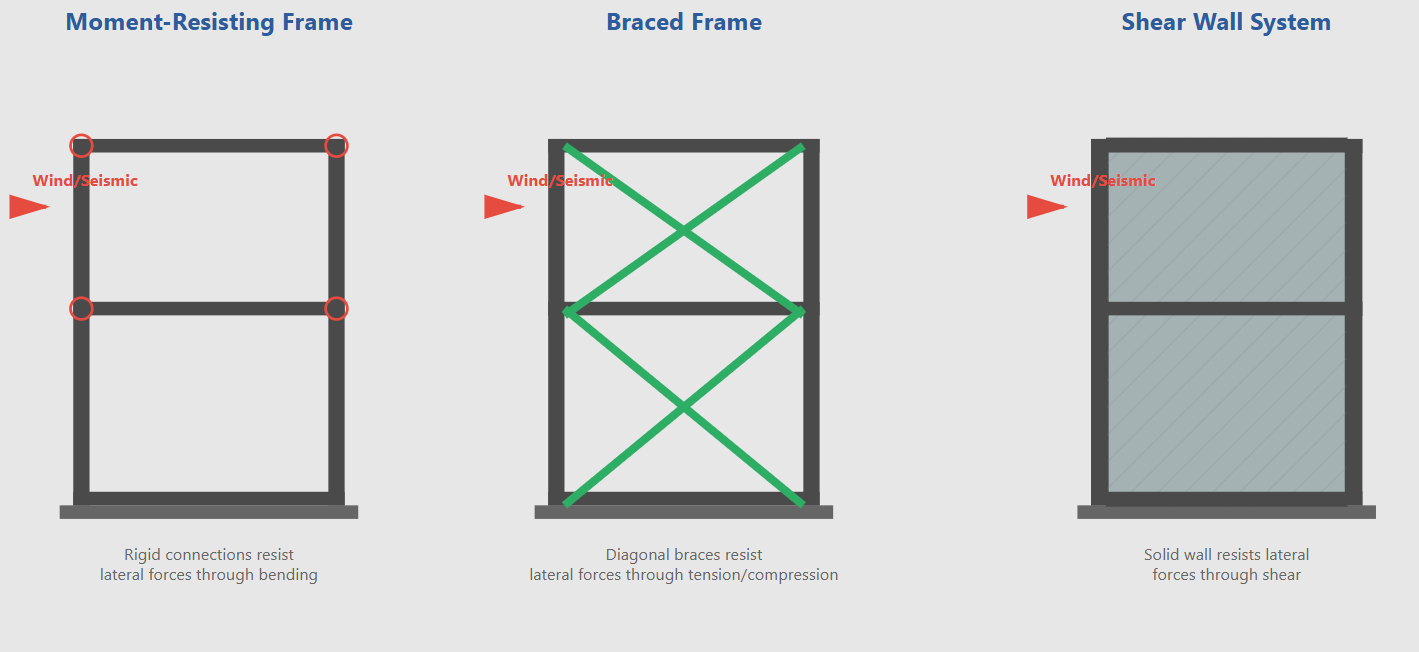
The choice of lateral system depends on building height, seismic design category, occupancy, and architectural requirements. Common systems include moment-resisting frames, braced frames, and shear walls, each with specific design provisions outlined in the AISC standards.
Wind Design Considerations
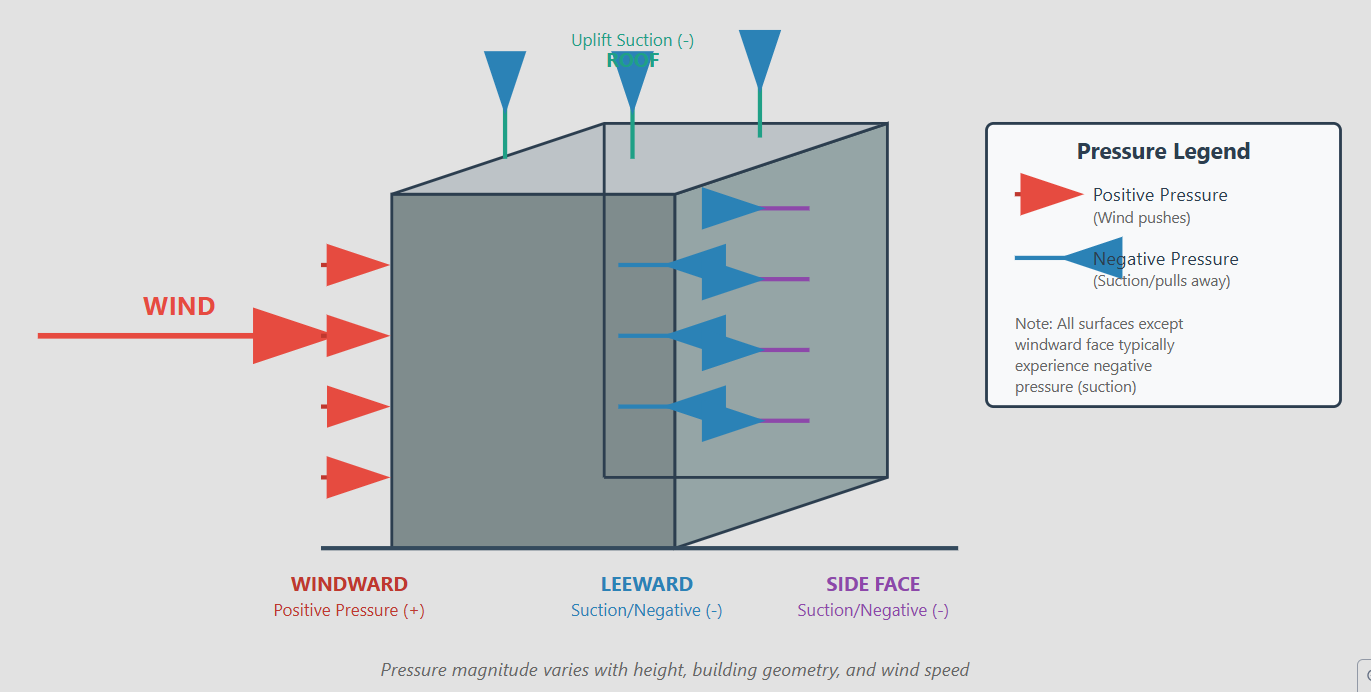
Wind loads create both static and dynamic pressures on building surfaces. The AISC Manual references ASCE 7 for determining wind loads but provides detailed guidance on designing steel members and connections to resist these forces. Wind-resistant design focuses on several key aspects:
Member Design: Steel members in the lateral system must be designed for the combined effects of gravity and wind loads. The AISC Specification requires checking both strength limit states using Load and Resistance Factor Design (LRFD) or Allowable Strength Design (ASD) methods. Members must have adequate strength, stiffness, and stability to resist buckling under compressive forces induced by wind.
Connection Design: Connections are critical in wind-resistant design. The AISC Manual provides extensive guidance on moment connections, braced frame connections, and base plate connections. Bolted and welded connections must be detailed to transfer forces reliably while accommodating fabrication tolerances. The Detailing for Steel Construction manual emphasizes the importance of clear communication between designers and fabricators regarding connection requirements.
Drift Limitations: Serviceability under wind loads is equally important as strength. AISC standards recommend limiting interstory drift to prevent damage to non-structural elements and ensure occupant comfort. The Manual provides deflection calculation procedures and stiffness requirements for various structural systems.
Seismic Design Philosophy
Seismic design according to AISC standards follows a capacity-based approach that allows controlled inelastic behavior during major earthquakes while maintaining life safety. The AISC Seismic Provisions supplement the main Specification with additional requirements for seismic force-resisting systems.
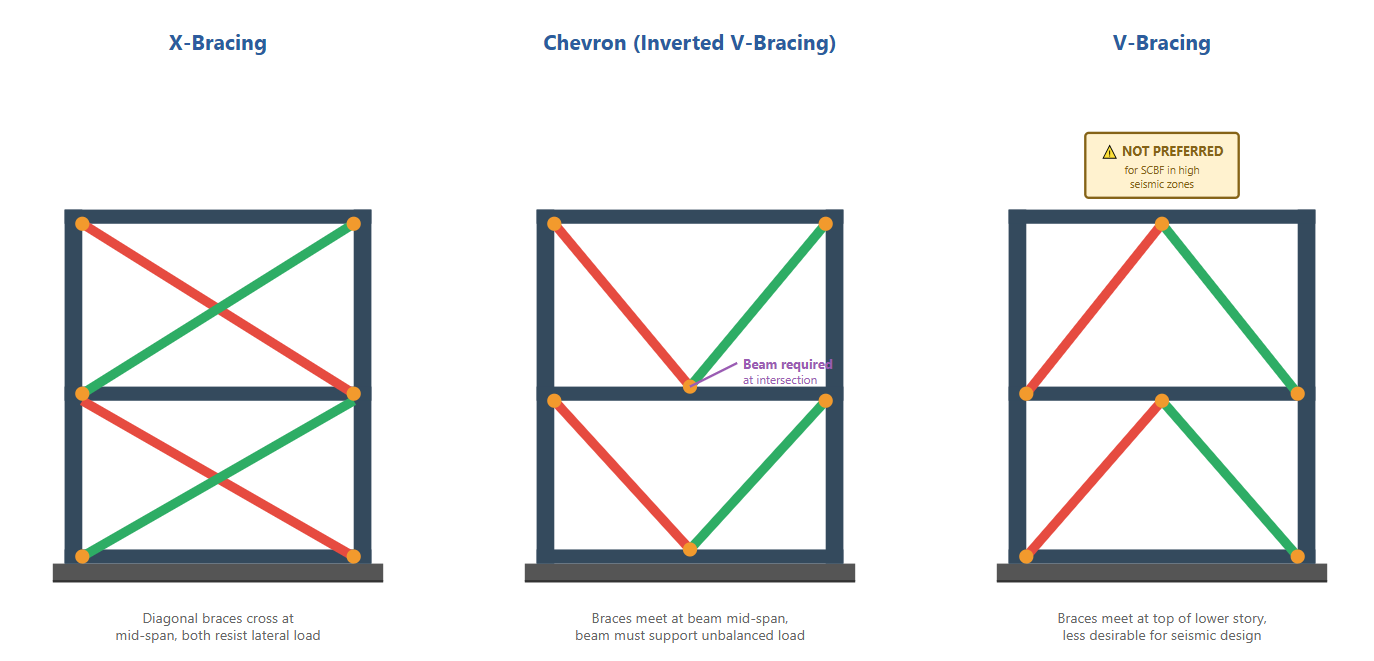
System Selection and Design: AISC recognizes several seismic force-resisting systems, each classified by response modification factor (R-factor) that reflects its ability to dissipate energy through inelastic deformation. Special Moment Frames (SMF), Intermediate Moment Frames (IMF), Ordinary Moment Frames (OMF), Special Concentrically Braced Frames (SCBF), and Buckling-Restrained Braced Frames (BRBF) are among the systems detailed in the standards.
Each system has specific requirements for member sizing, connection design, and detailing. For instance, SMFs require rigorous attention to strong-column weak-beam design philosophy, where plastic hinges form in beams rather than columns, ensuring the lateral system maintains its integrity during seismic events.
Detailing for Ductility: The Detailing for Steel Construction manual emphasizes that proper detailing is essential for seismic performance. Compact sections are required for members expected to undergo inelastic deformation, ensuring they can develop plastic hinges without local buckling. Width-thickness ratios of compression elements must meet stringent limits specified in the AISC Seismic Provisions.
Connection Performance: Seismic connections must demonstrate adequate strength, stiffness, and ductility. The AISC standards require prequalified connections for moment frames, which have been tested to validate their seismic performance. For systems using bolted connections, slip-critical connections with pre-tensioned high-strength bolts are often specified to prevent slippage during cyclic loading.
Quality Assurance and Special Inspections
Both wind and seismic design require rigorous quality control during fabrication and erection. The AISC Code of Standard Practice outlines responsibilities of all parties involved in steel construction projects. For seismic applications, special inspection requirements ensure that critical elements are fabricated and installed according to design intent.
Welding procedures require particular attention, with specific requirements for weld inspection and testing outlined in the AWS D1.8 Seismic Supplement when referenced by AISC standards. Bolt installation, especially for high-strength bolted connections in seismic systems, must follow strict procedures to achieve proper pretension.
Conclusion
Designing steel structures for wind and seismic forces requires comprehensive understanding of AISC standards and careful attention to analysis, member design, connection detailing, and quality assurance. The AISC Manual for Structural Steel Construction, Specifications for Structural Steel Buildings, and Detailing for Steel Construction provide engineers with the tools and guidance necessary to create safe, efficient, and resilient structures.
As building codes evolve and our understanding of structural behavior improves, AISC continues to update its standards, ensuring that structural steel remains a premier choice for buildings that must resist significant lateral forces. Engineers who master these provisions can design structures that not only meet code requirements but exceed expectations for performance and durability in challenging environmental conditions.