

Wall bearing beams represent a critical structural element in steel construction, serving as the interface between vertical wall systems and the structural framework. According to the American Institute of Steel Construction (AISC) standards, proper design and detailing of wall bearing beams is essential for ensuring structural integrity, load transfer efficiency, and overall building performance. This comprehensive guide explores the key requirements and considerations for wall bearing beams as outlined in the AISC Manual for Steel Construction, AISC Specifications, and the Code of Standard Practice.
What Are Wall Bearing Beams?
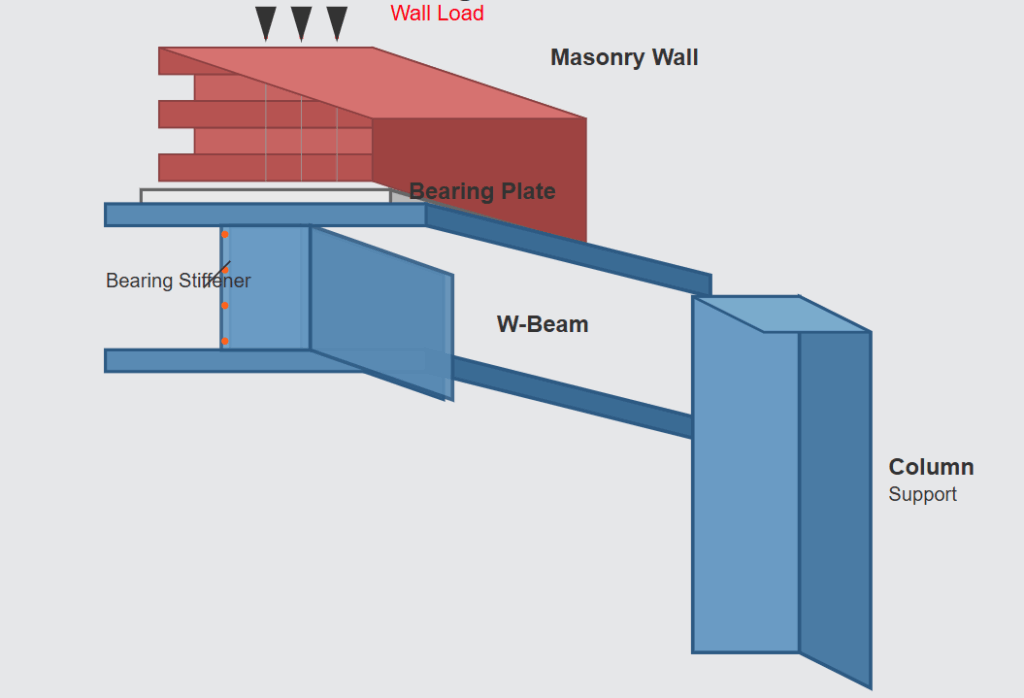
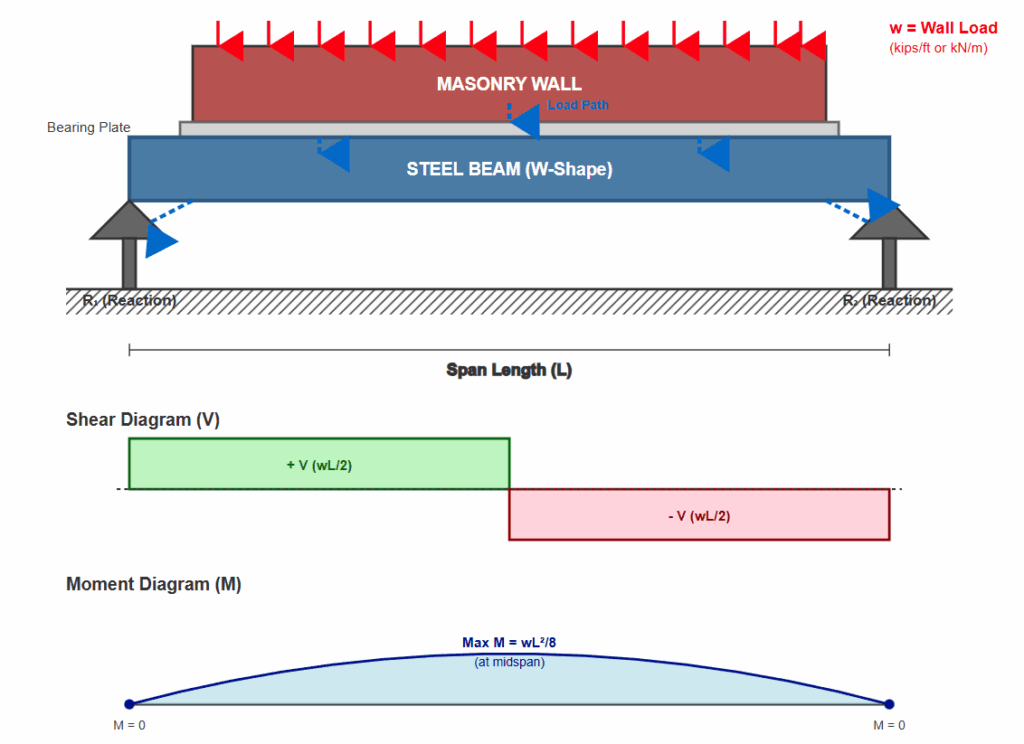
Wall bearing beams are horizontal structural members designed to support wall loads and transfer them to columns, other beams, or foundations. These beams can support various wall types, including masonry walls, concrete walls, curtain walls, and metal panel systems. The beam must be designed to resist not only the vertical loads from the wall but also any lateral forces, thermal movements, and construction loads.
Design Considerations Per AISC Standards
Load Types and Combinations
According to AISC specifications, wall bearing beams must be designed to resist several types of loads:
Dead Loads: The self-weight of the wall system, including finishes, insulation, and the beam itself. AISC requires accurate calculation of material densities and component weights.
Live Loads: While walls typically don’t support traditional live loads, wind loads and seismic forces can create significant lateral pressures that must be considered in the design.
Construction Loads: Temporary loads during construction, including workers, materials, and equipment, must be accounted for per AISC guidelines.
The AISC Load and Resistance Factor Design (LRFD) method requires that load combinations be evaluated to determine the critical design condition. The most common combinations for wall bearing beams include dead load plus wind load, and dead load plus seismic load.
Bearing and Connection Design
One of the most critical aspects of wall bearing beam design is the bearing interface. The AISC Specification provides specific requirements for:
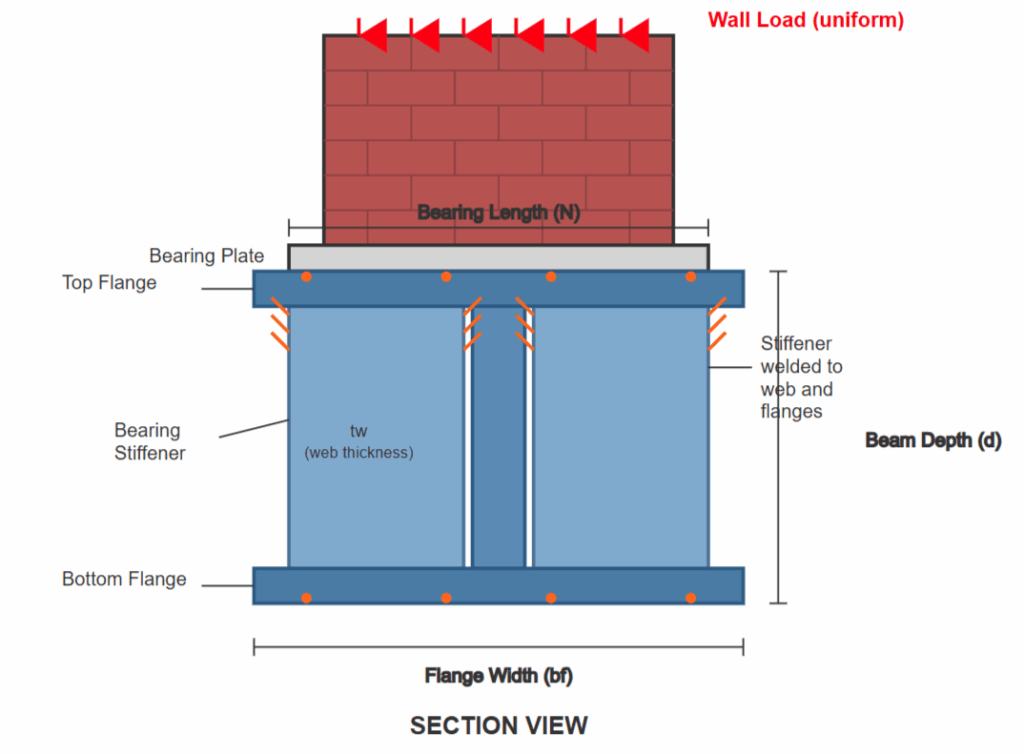
Bearing Stiffeners: When concentrated loads from walls exceed the web’s local yielding or crippling capacity, bearing stiffeners must be provided. These are typically fabricated from plates welded to the beam web and flanges.
Web Yielding and Crippling: The AISC Manual provides equations to check web local yielding and web crippling. The bearing length and the distance from the load to the beam end significantly affect these limit states.
Connection Details: Wall-to-beam connections must allow for differential movement while maintaining load transfer capability. AISC detailing standards recommend specific clearances and connection types based on wall material and loading conditions.
Deflection Criteria
Deflection control is particularly important for wall bearing beams. The AISC Specification doesn’t mandate specific deflection limits, but industry practice and the needs of the supported wall system typically govern. Common deflection limits include:
- L/360 for walls that are fragile or include brittle finishes
- L/240 for more flexible wall systems
- L/180 for structural performance under service loads
Where L represents the span length. Excessive deflection can cause wall cracking, panel misalignment, or damage to architectural finishes.
Detailing Requirements
The AISC Code of Standard Practice for Steel Buildings and Bridges provides specific detailing requirements for wall bearing beams:
Camber
Beams supporting walls may require camber to compensate for dead load deflection. This prevents the appearance of sagging and ensures proper alignment of wall elements. Cambering should be specified on construction drawings with clear tolerances.
Bearing Plates and Seats
Steel bearing plates may be required between masonry or concrete walls and steel beams. These plates distribute concentrated loads and provide a level bearing surface. AISC standards require that plate dimensions be adequate to prevent overstressing of the wall material.
Fire Protection
Wall bearing beams may require fire protection depending on building codes and the fire resistance rating required. The AISC Fire Protection specification provides guidance on protection methods and materials.
Special Considerations
Thermal Movement
Walls, especially those exposed to exterior conditions, experience thermal expansion and contraction. Wall bearing beams and their connections must accommodate these movements without inducing excessive stresses. Slotted holes, expansion joints, or sliding connections may be necessary.
Masonry Wall Support
When supporting masonry walls, special attention must be paid to:
- Adequate bearing length (typically minimum 4 inches)
- Provisions for differential movement between steel and masonry
- Shelf angles or continuous support as required
- Proper flashing and moisture protection integration
Lateral Bracing
Wall bearing beams must have adequate lateral bracing to prevent lateral-torsional buckling. The top flange may be continuously braced by the wall system, but this must be verified based on the connection details and wall rigidity.
Quality Control and Inspection
The AISC Code of Standard Practice outlines quality requirements for fabrication and erection. Wall bearing beams should be inspected for:
- Proper member size and grade
- Accurate hole locations for wall connections
- Specified camber within tolerances
- Bearing stiffeners properly welded where required
- Surface preparation for corrosion protection
Wall bearing beams are essential components in steel building construction that require careful consideration of multiple design factors. By following AISC standards and specifications, engineers can ensure these members perform adequately throughout the building’s service life. Proper attention to load calculation, bearing design, deflection control, and detailing results in successful integration of wall systems with the structural steel framework.
Understanding these requirements not only ensures compliance with industry standards but also contributes to the overall safety, durability, and performance of the structure. As building designs become more complex and performance expectations increase, adherence to AISC guidelines for wall bearing beam design and detailing remains more critical than ever.