

Steel framing systems form the backbone of modern industrial and commercial construction, providing strength, durability, and design flexibility. Understanding the standards that govern these systems is essential for engineers, detailers, and contractors working on steel building projects. This comprehensive guide explores roof and wall framing according to AISC standards and industry best practices.
The AISC Framework: Primary Structural Systems
The American Institute of Steel Construction (AISC) provides the foundational standards for structural steel construction through several key documents. The AISC Manual for Steel Construction serves as the primary reference for designing and detailing hot-rolled structural steel members, while the Specification for Structural Steel Buildings establishes the design criteria and requirements that govern structural integrity.
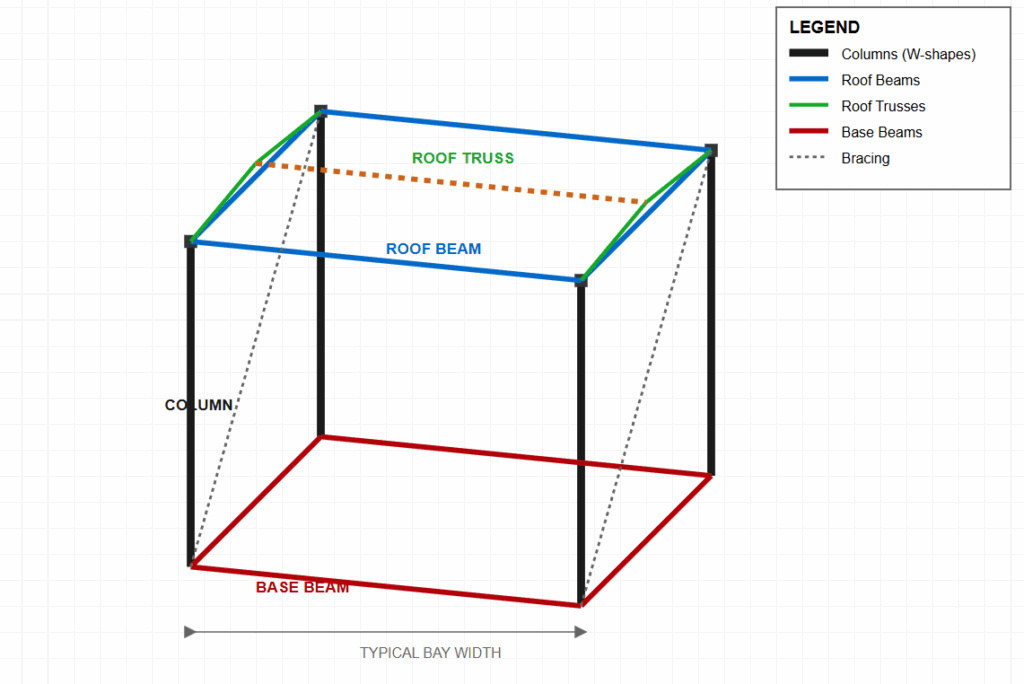
For roof and wall systems, AISC standards primarily address the primary structural framing, the main load-bearing framework that supports the building. This includes rigid frames, moment frames, and braced frames that form the skeleton of the structure. These primary members, typically consisting of wide-flange beams, columns, and trusses, carry the major loads from the roof and walls down to the foundation.
The primary roof framing system usually consists of roof beams or trusses spanning between columns or bearing walls. These members are designed according to AISC specifications for bending, shear, deflection, and other limit states. The spacing of these primary members is determined by the span capabilities of the secondary framing system and the overall building economics.
Secondary Framing: Purlins and Girts
While AISC standards govern the primary structure, roof and wall secondary framing involves a different set of members and standards. Secondary framing includes purlins (roof framing members) and girts (wall framing members) that span between the primary structural members to directly support the roof and wall cladding.
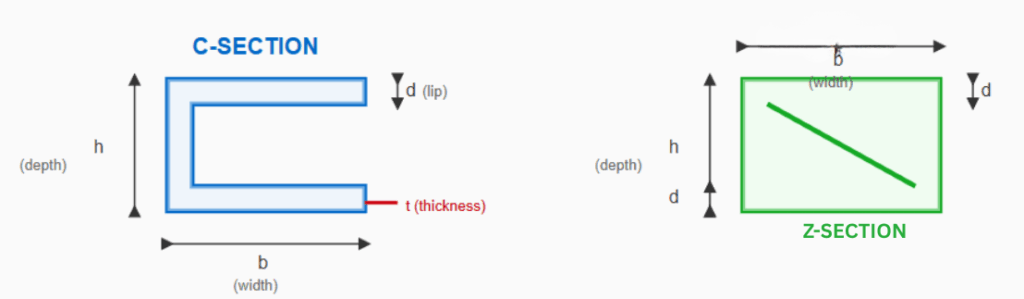
Roof purlins are horizontal members that run perpendicular to the primary roof framing, providing direct support for the roof deck or panels. These are typically cold-formed steel members such as C-sections or Z-sections, though hot-rolled angles or channels may be used in some applications. Purlins transfer loads from the roof covering to the primary structural frames.
Wall girts serve a similar function for wall systems, spanning horizontally between columns to support wall panels or siding. Like purlins, girts are most commonly cold-formed steel members, though the specific type depends on the wall system, wind loads, and architectural requirements.
The design of these secondary members typically follows standards from the American Iron and Steel Institute (AISI) for cold-formed steel design, particularly the North American Specification for the Design of Cold-Formed Steel Structural Members. However, the interface between primary AISC-governed framing and secondary framing must be carefully coordinated.
AISC Code of Standard Practice: Detailing Requirements
The AISC Code of Standard Practice for Steel Buildings and Bridges establishes the standards for detailing, fabrication, and erection of structural steel. This document is crucial for roof and wall framing as it defines responsibilities, tolerances, and coordination requirements between different parties involved in construction.
Key provisions relevant to roof and wall framing include:
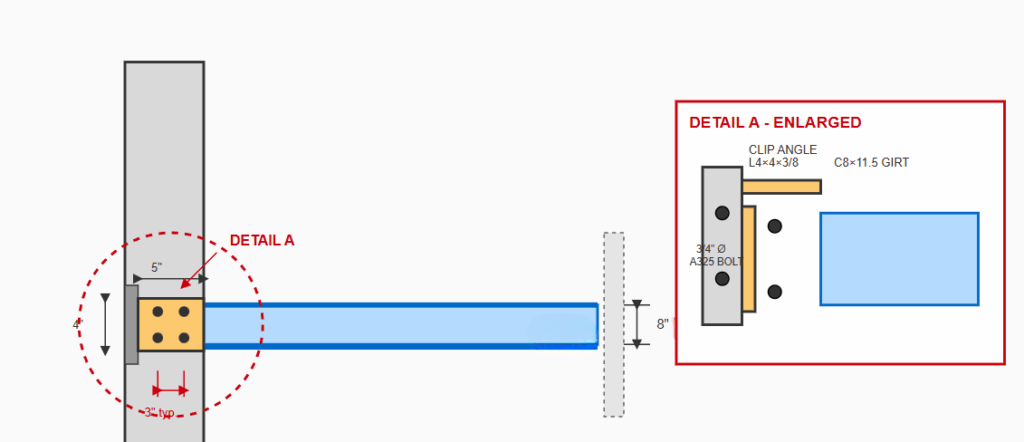
Connection Design and Responsibility: The Code clarifies who is responsible for designing connections between primary and secondary members. Typically, the structural engineer of record designs primary framing connections, while secondary framing suppliers often design their own connections to the primary structure, subject to approval.
Dimensional Tolerances: AISC establishes tolerance requirements for primary member placement, which directly affects the fit-up of secondary framing. Understanding these tolerances is essential when detailing purlin and girt connections to ensure proper installation despite normal construction variations.
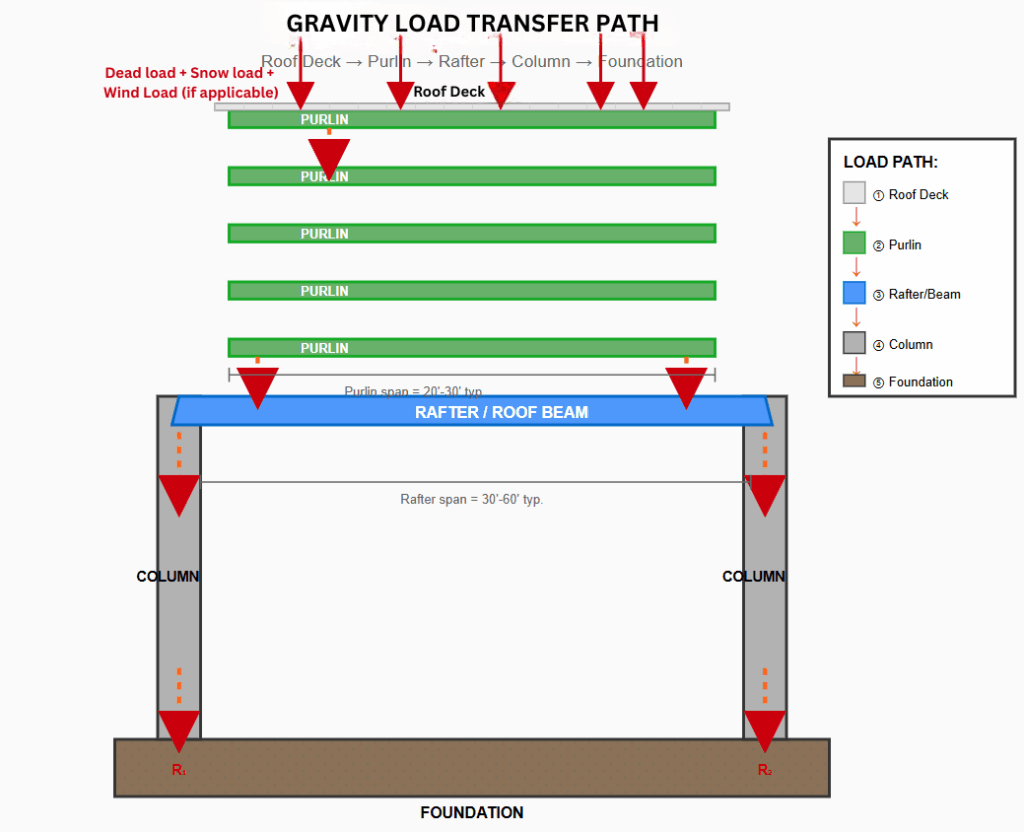
Loads and Load Paths: The Code requires clear communication of loads and load paths. For roof and wall systems, this means properly documenting how loads transfer from cladding through secondary framing to primary members and ultimately to the foundation.
Integrated Framing Systems: Bringing It Together
Successful roof and wall framing requires understanding how primary AISC-governed members work with secondary framing systems. The primary structural frame must be designed with appropriate connection points and adequate strength to support reactions from purlins and girts. The spacing and configuration of primary members directly influences the economical span range for secondary members.
Modern steel buildings often use pre-engineered metal building systems where the primary frame, secondary framing, and cladding are designed as an integrated package. Even in these systems, AISC standards govern the primary structural members, while the complete system must satisfy building code requirements for strength, serviceability, and safety.
Engineers must consider several factors when designing integrated roof and wall framing systems: wind and snow loads that create pressure or suction on wall and roof surfaces; thermal expansion and contraction of long roof and wall assemblies; drift and ponding considerations for roof systems; and the interaction between structural framing and architectural requirements for insulation, vapor barriers, and weatherproofing.
Detailing Best Practices
Proper detailing is crucial for constructible and economical roof and wall framing. The AISC Detailing for Steel Construction manual provides guidance on creating clear, complete shop drawings and erection plans. For roof and wall systems, detailers must carefully coordinate between structural steel drawings and secondary framing supplier drawings.
Connection details should account for adjustment capability to accommodate normal construction tolerances. Slotted holes, adjustable cleats, and other provisions allow field personnel to make minor adjustments during erection. Detailers should also consider the erection sequence, often purlins and girts are installed after primary frame erection to provide lateral bracing for the structure.
Roof and wall framing in structural steel construction represents a coordination of standards, systems, and expertise. AISC standards provide the foundation for primary structural framing design and detailing, establishing requirements that ensure safety and performance. These primary systems work in concert with secondary framing members to create complete, functional building envelopes.
Understanding both the AISC framework and how it interfaces with secondary framing standards enables design professionals to create efficient, economical, and constructible steel buildings. Whether working on a custom-designed structure or a pre-engineered.