

In structural steel construction, precision in documentation makes the difference between success and costly errors. The Bill of Materials (BOM) is one of the most critical documents in this process. According to American Institute of Steel Construction (AISC) standards, the BOM serves as the backbone of steel detailing and fabrication, ensuring every piece of steel is properly specified and accounted for.
What is a Bill of Materials?
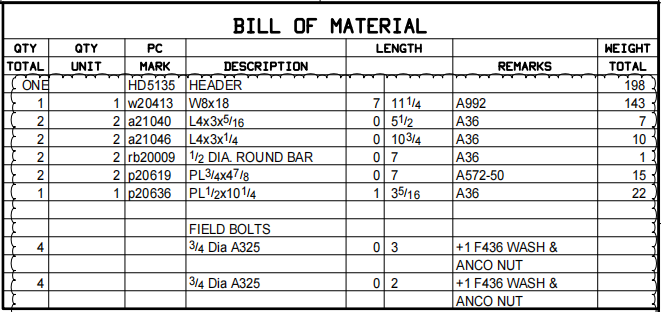
A Bill of Materials in structural steel construction is a comprehensive listing of all steel members, connections, and materials required for a project. As outlined in the AISC Manual for Structural Steel Construction and the Specifications for Structural Steel Buildings, the BOM is a detailed technical document that bridges the gap between design and fabrication. It provides fabricators, erectors, and project managers with essential information about each structural element, including member designations, quantities, lengths, grades of steel, and connection requirements.
Key Components of an AISC-Compliant Bill of Materials
According to AISC’s Detailing for Steel Construction standards, a properly prepared Bill of Materials must include several critical elements:
Member Identification: Each structural member must be clearly identified with a unique mark or designation. This system allows for easy tracking throughout fabrication, shipping, and erection. The AISC standards emphasize the importance of consistent marking systems that prevent confusion on the job site.
Material Specifications: The BOM must specify the grade of steel for each member, such as ASTM A992 for wide-flange shapes or ASTM A36 for plates and bars. These designations ensure that materials meet the strength and performance requirements established in the project’s structural design.
Member Sizes and Dimensions: Precise dimensions are crucial. For rolled shapes, this includes standard designations (such as W24×68), while for built-up members, all component dimensions must be detailed.
Quantities and Lengths: The BOM specifies the number of pieces required for each member type and their respective lengths. This information is essential for material procurement and helps minimize waste during fabrication.
Connection Details: While not always included in the basic BOM, connection information such as bolt types, weld specifications, and plate dimensions may be referenced or included, particularly for complex connections.
Relationship Between Drawings and the Bill of Materials
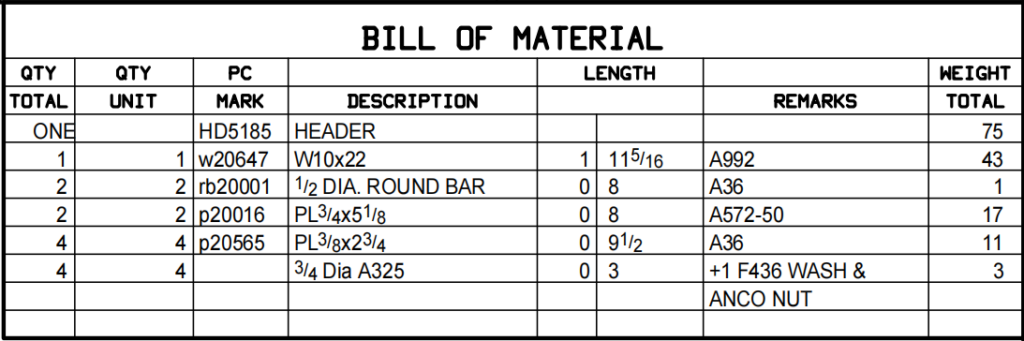
The AISC Detailing for Steel Construction manual emphasizes the critical relationship between structural drawings and the Bill of Materials. The BOM must correspond exactly to the information shown on design and detail drawings. Shop drawings prepared by fabricators include detailed BOMs that expand upon contract documents, breaking down assemblies into individual components and specifying fabrication requirements.
Organizing the Bill of Materials
AISC standards suggest organizing the BOM logically to facilitate fabrication and erection. Common methods include organizing by building area (by grid lines or floors), by member type (beams, columns, braces separately), or by shipping piece to ensure components arrive together.
The Role of BOM in Project Coordination
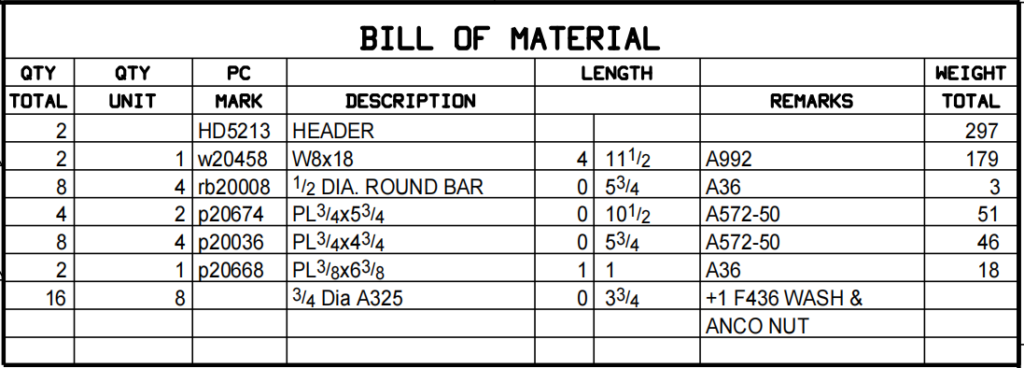
The Bill of Materials serves multiple stakeholders throughout construction. For structural engineers, it verifies design intent. For fabricators, it serves as the production schedule and material ordering guide. For contractors, it aids in scheduling and logistics. For erectors, it becomes a field reference document. According to AISC specifications, the BOM also plays a crucial role in quality control, providing a complete inventory for systematic verification that all components meet specified grades, sizes, and quantities.
Material Procurement and the BOM
The AISC Manual for Structural Steel Construction provides guidance on how the BOM supports efficient material procurement. By specifying exact quantities and dimensions, the BOM enables fabricators to order materials with minimal waste. The standards also address material substitutions, noting that any deviations must be reviewed and approved by the engineer of record.
Digital Evolution
While AISC standards were developed in an era of paper documentation, modern practice increasingly involves digital BOMs integrated with Building Information Modeling (BIM) systems. However, the fundamental requirements established by AISC; accuracy, completeness, and clarity, remain unchanged regardless of the medium.
The Bill of Materials is a fundamental document that ensures quality, efficiency, and accuracy in structural steel construction. By adhering to AISC standards for BOM preparation, professionals can minimize errors, reduce costs, and deliver successful projects. Whether you’re a detailer preparing shop drawings, a fabricator ordering materials, or an engineer reviewing submittals, understanding the proper structure and content of a Bill of Materials according to AISC standards is essential for professional practice in structural steel construction.