

In the intricate world of structural steel construction, shop drawings serve as the vital translation between architectural vision and fabrication reality. These detailed technical documents represent far more than simple construction blueprints—they embody the fabricator’s comprehensive interpretation of engineering intent, transforming conceptual designs into precise manufacturing instructions. The American Institute of Steel Construction has established rigorous standards for these critical documents through their foundational publications: the Manual for Structural Steel Construction, the Specifications for Structural Steel Construction, and the third edition of Detailing for Steel Construction.
Shop drawings occupy a unique position in the construction process, bridging the gap between the engineer’s structural calculations and the fabricator’s workshop floor. Unlike design drawings that communicate overall structural concepts and load paths, shop drawings provide the granular detail necessary for actual steel fabrication.
What are Shop Drawings?
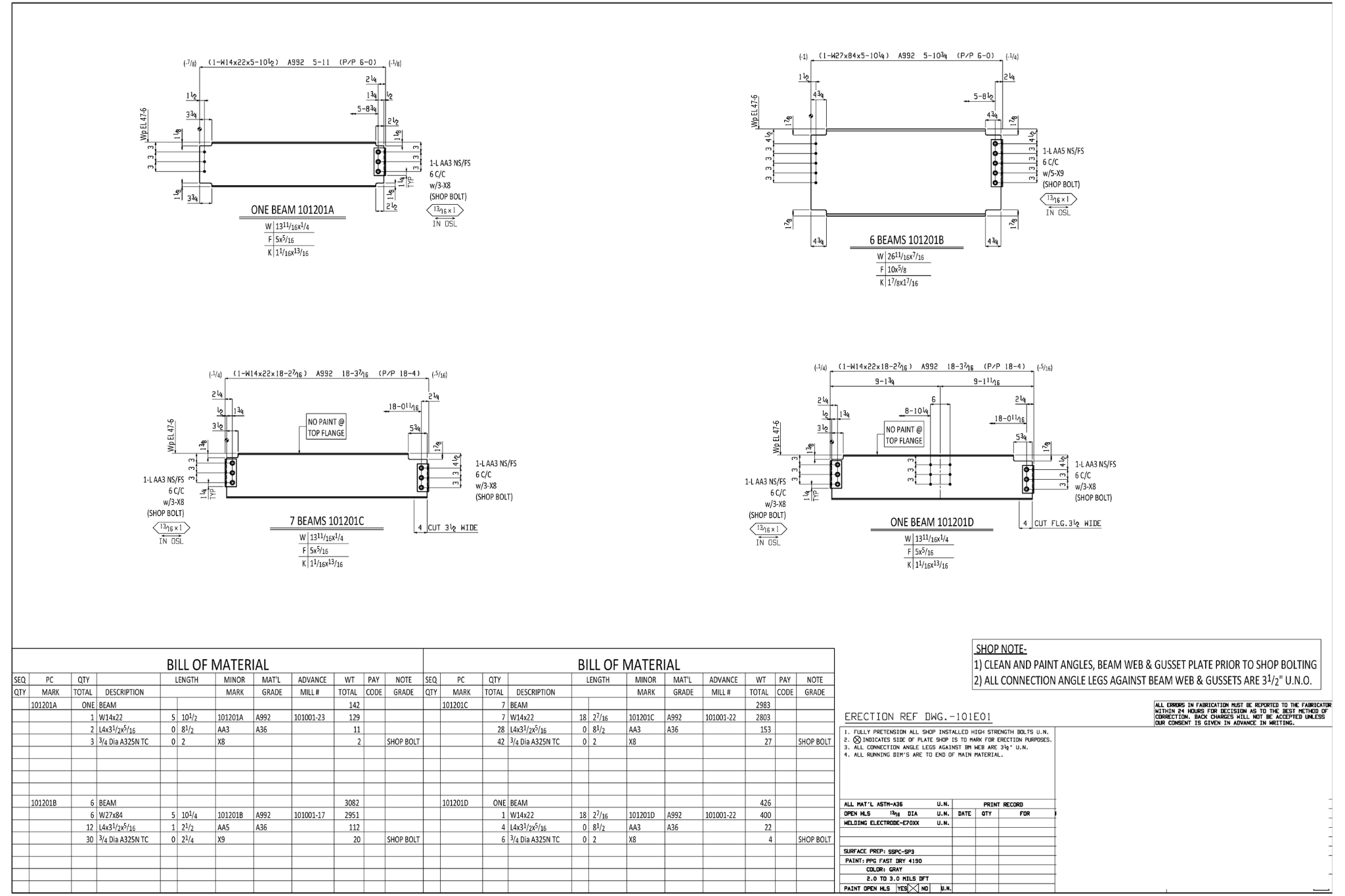
The AISC defines shop drawings as detailed fabrication drawings that demonstrate how structural steel members will be manufactured, assembled, and ultimately erected in the field. These documents serve multiple stakeholders throughout the construction process, providing fabricators with precise manufacturing instructions while giving engineers confidence that their design intent will be properly executed.
Shop drawings must demonstrate complete compliance with the ANSI/AISC 360 Specification for Structural Steel Buildings, addressing several key purposes:
- Material Procurement – Providing detailed specifications for steel grades, fasteners, and consumables
- Fabrication Processes – Offering step-by-step manufacturing instructions and sequences
- Quality Control – Establishing inspection points and acceptance criteria throughout production
AISC Compliance Requirements
The current AISC specifications establish comprehensive requirements that ensure consistency across the industry while maintaining the flexibility necessary to address project-specific requirements. The Specification for Structural Steel Buildings provides the technical foundation for all design verification, while the Manual for Structural Steel Construction offers practical guidance for connection design and detailing practices.
Material Specifications
Every AISC-compliant shop drawing must clearly identify all materials with appropriate designations:
- Steel Grades – A36, A572 Grade 50, A992, A588 weathering steel, and specialty grades as required
- Bolt Specifications – A325, A490, F1852 twist-off bolts with appropriate strength designations
- Welding Materials – Electrode types, flux specifications, and shielding gas requirements

Dimensional Accuracy Standards
AISC standards require strict dimensional control throughout the shop drawing development process:
- Fabrication Tolerances – Compliance with AISC Code of Standard Practice Section 6 requirements
- Camber Requirements – Specified values for beams and girders based on loading conditions
- Connection Geometry – Precise hole locations, edge distances, and spacing requirements
Required Information on Shop Drawings
The AISC Detailing for Steel Construction manual specifies comprehensive information requirements that ensure complete communication between design and fabrication teams. These requirements address both basic identification needs and detailed technical specifications necessary for successful project execution.
Basic Project Information
Every shop drawing must include fundamental project identification and organizational details:
- Project Identification – Complete project name, location, and contract number
- Drawing Numbers – Sequential numbering system with logical organization and revision tracking
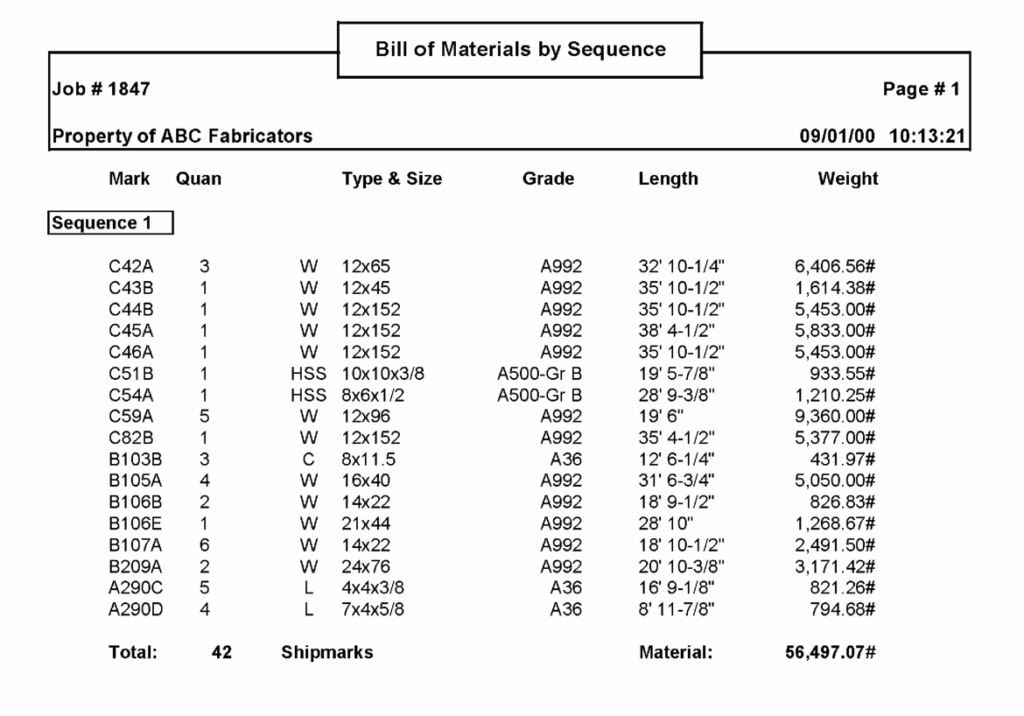
- Material Lists – Complete schedules with ASTM designations, quantities, and procurement information
- Member Identification – Unique marks for every piece with clear referencing systems
- Dimensional Control – Overall building dimensions, elevations, and critical reference points
Detailed Fabrication Requirements
Technical specifications must provide complete manufacturing guidance:
- Cutting Dimensions – Precise lengths, angles, and material preparation requirements
- Hole Specifications – Locations, sizes, drilling methods, and quality requirements
- Weld Details – Complete AWS symbol notation with sizes, types, and inspection criteria
Drawing Standards and Conventions
AISC establishes specific presentation standards that ensure consistent communication across different fabrication facilities and project teams. These conventions address both graphic presentation and technical notation requirements.
Graphic Presentation Standards
Professional shop drawing presentation follows established conventions:
- Line Weights – Heavy lines for visible edges, medium for hidden features, light for dimensions
- Line Types – Solid for object lines, dashed for hidden elements, center lines for symmetry
- Dimensioning Practices – Clear dimension chains with appropriate precision and units
- Text Standards – Consistent fonts, sizes, and placement for optimal readability
- Symbol Usage – Standard AISC symbols for materials, processes, and specifications

Technical Notation Requirements
Comprehensive technical communication requires systematic notation:
- Welding Symbols – Complete AWS standard notation with tail information as required
- Material Designations – Standard AISC abbreviations and designation systems
- Process Specifications – Clear indication of fabrication methods and quality requirements
- Reference Standards – Citations of applicable codes, specifications, and standards
- Special Instructions – Detailed notes for unusual conditions or requirements
The Shop Drawing Development Process
The creation of AISC-compliant shop drawings follows a systematic process that transforms general design concepts into specific fabrication instructions. This process requires careful coordination between multiple disciplines and thorough review at several levels to ensure accuracy and completeness.
Phase 1: Document Review and Coordination
Initial development begins with comprehensive analysis of project requirements:
- Contract Document Review – Thorough examination of plans, specifications, and supplemental information
- Trade Coordination – Interface resolution with concrete, mechanical, electrical, and other building systems
- Code Compliance – Verification of design conformance with applicable building codes and standards
- Material Optimization – Selection of efficient material sizes and grades within design parameters
- Fabrication Planning – Development of logical sequences that optimize workshop efficiency
Phase 2: Detail Development
Technical development transforms design concepts into fabrication instructions:
- Member Detailing – Complete dimensional development with all cutting and preparation requirements
- Connection Design – Verification of capacity requirements and geometric constraints
- Assembly Planning – Logical sequences for complex fabrications with temporary support requirements
- Quality Integration – Incorporation of inspection requirements and acceptance criteria
- Documentation Preparation – Organization of supporting calculations and reference materials
Phase 3: Review and Approval Process
Systematic review ensures accuracy and completeness before fabrication begins:
- Internal Checking – Dimensional verification, specification compliance, and fabrication feasibility
- Engineering Review – Structural engineer verification of design intent and connection adequacy
- Coordination Review – General contractor confirmation of interface requirements and scheduling
- Final Approval – Owner or architect review as required by contract documents
- Release for Fabrication – Formal authorization to begin material procurement and manufacturing
Connection Design and Verification
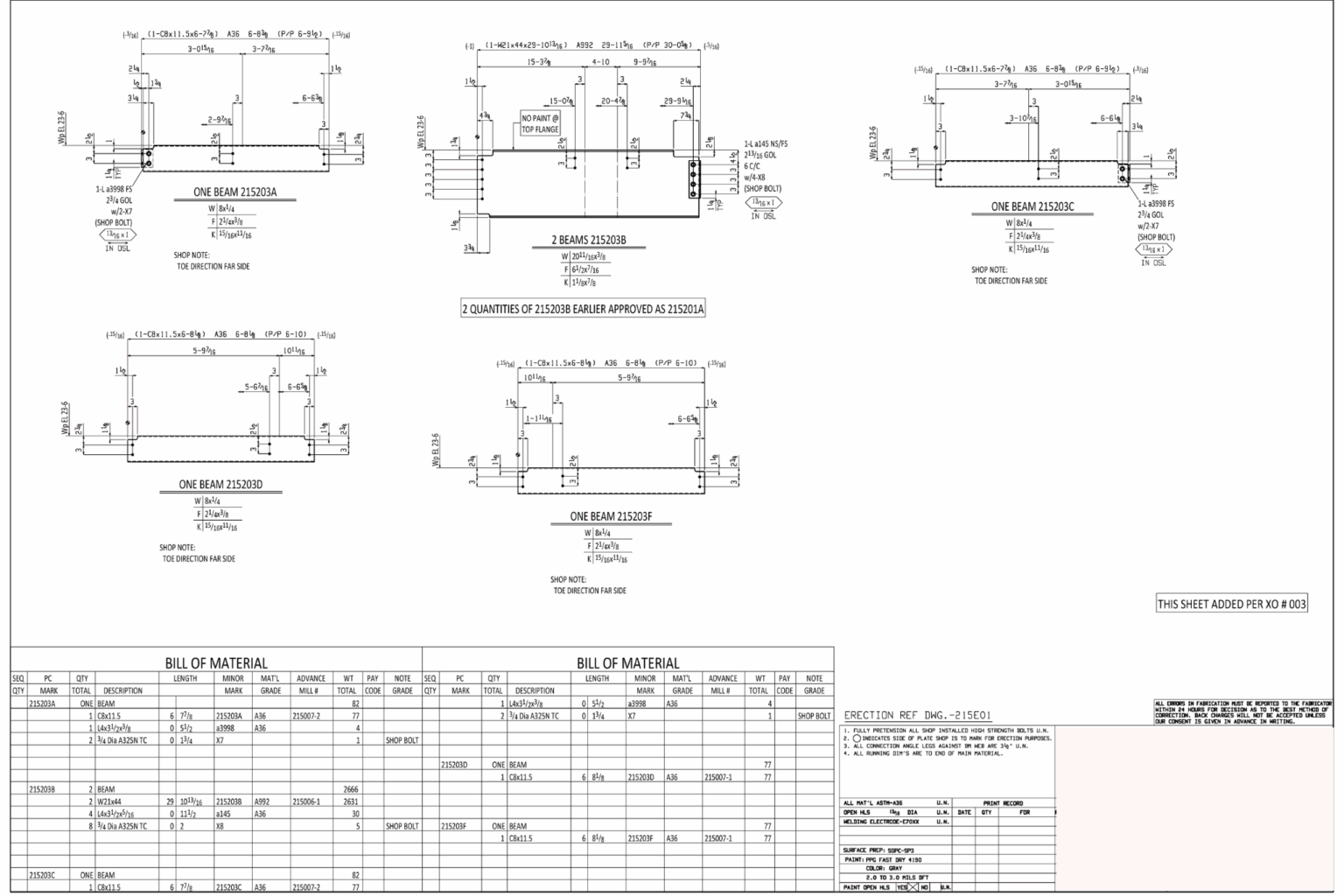
Connection details represent the most technically demanding aspect of shop drawing development. The detailer must demonstrate that every connection meets the capacity requirements established by the structural engineer while satisfying the geometric constraints imposed by the AISC Specification. This verification process requires comprehensive understanding of connection behavior and design procedures.
Bolted Connection Requirements
Bolted connections must satisfy multiple design criteria simultaneously:
- Shear Capacity – Verification of bolt shear strength and bearing capacity on connected materials
- Tension Capacity – Analysis of bolt tension capacity with consideration of prying action effects
- Spacing Requirements – Minimum and maximum spacing between bolts per AISC specifications
- Edge Distance – Adequate material beyond bolt holes to prevent bearing failure
- Installation Access – Sufficient clearance for wrench access and proper bolt installation

Welded Connection Specifications
Welded connections require comprehensive technical specifications:
- Weld Size Determination – Capacity verification based on applied loads and material properties
- Joint Configuration – Selection of appropriate joint types for load transfer requirements
- Welding Procedures – Reference to qualified procedures with appropriate prequalification
- Inspection Requirements – Specification of nondestructive testing methods and acceptance criteria
- Quality Control – Documentation of welder qualifications and procedure compliance
Quality Control and Documentation
The AISC standards emphasize comprehensive quality assurance throughout the fabrication and construction process. Shop drawings must provide clear guidance for quality control activities while establishing documentation requirements that support project success and regulatory compliance.
Inspection and Testing Requirements
Quality assurance procedures must address multiple aspects of fabrication:
- Material Verification – Mill test certificate review and supplemental testing as required
- Dimensional Control – Measurement procedures and tolerance verification throughout fabrication
- Weld Quality – Visual inspection supplemented by nondestructive testing as specified
- Connection Verification – Bolt torque verification and installation quality confirmation
- Final Inspection – Comprehensive review before shipment with documented acceptance
Documentation and Traceability
Complete project documentation supports both immediate needs and long-term performance:
- Fabrication Records – Detailed tracking of materials, processes, and quality verification
- Test Results – Complete documentation of all inspection and testing activities
- Certification Packages – Organized presentation of quality assurance documentation
- Shipping Documentation – Piece identification and handling instructions for field delivery
- As-Built Records – Final documentation reflecting any approved field modifications
Modern Technology and Shop Drawing Production
Contemporary shop drawing production increasingly leverages advanced technology while maintaining strict adherence to AISC standards. These technological advances enhance traditional detailing capabilities while improving accuracy, efficiency, and coordination throughout the design and construction process.
Building Information Modeling integration enables comprehensive coordination between structural systems and other building components, identifying conflicts before they can impact construction schedules. Three-dimensional modeling capabilities allow detailers to visualize complex connections and assembly sequences before committing to final fabrication details. Computer-aided detailing systems incorporate AISC design verification algorithms that automatically check connection capacities and dimensional requirements.
Technology Integration Benefits
Modern detailing technology provides significant advantages:
- 3D Visualization – Enhanced understanding of complex geometries and connection details
- Automated Checking – Built-in verification of AISC compliance and design requirements
- Material Optimization – Algorithms that maximize efficiency while maintaining performance
- Fabrication Integration – Direct data transfer to automated cutting and drilling equipment
- Collaboration Platforms – Real-time coordination between distributed project teams
Best Practices for AISC Compliance
Success in shop drawing development requires systematic application of proven practices that ensure both AISC compliance and project success. These practices address technical accuracy, communication effectiveness, and error prevention throughout the development process.
Effective communication represents a fundamental aspect of successful shop drawings. Comprehensive notes explain special requirements and unusual conditions that might not be immediately apparent from graphic information. Clear detail callouts reference specific drawing sections while maintaining logical information flow that supports efficient fabrication planning. Revision tracking procedures ensure that all project participants work from current information while maintaining documentation of design evolution.
Error Prevention Strategies
Systematic error prevention reduces costly corrections and delays:
- Standard Detail Libraries – Proven connection details that ensure consistency and accuracy
- Multi-Level Checking – Independent verification by experienced personnel at multiple stages
- Cross-Reference Systems – Comprehensive coordination between related drawings and specifications
- Version Control – Systematic management of revisions and updates throughout project development
- Constructability Review – Field experience input to identify potential installation challenges
Conclusion
Shop drawings represent the essential bridge between structural engineering design and successful steel construction. The AISC standards provide a comprehensive framework that ensures these critical documents maintain the highest levels of technical accuracy, fabrication feasibility, and construction safety. The Specification for Structural Steel Buildings serves as the technical foundation for all design verification, while the Manual for Structural Steel Construction and Detailing for Steel Construction provide practical guidance for implementation.
The investment in proper shop drawing development according to AISC standards pays significant dividends throughout the project lifecycle. Accurate and complete drawings reduce fabrication errors, minimize field problems, and support safe construction practices. For structural engineers, detailers, and fabricators, mastering AISC shop drawing requirements represents an essential professional competency that directly impacts project success and industry reputation.
The integrity of structural steel construction fundamentally depends on the accuracy and completeness of shop drawings prepared according to established AISC standards. These technical documents serve as the essential roadmap for transforming engineering concepts into constructed reality, ensuring that every connection, dimension, and material specification contributes to safe and successful project completion.